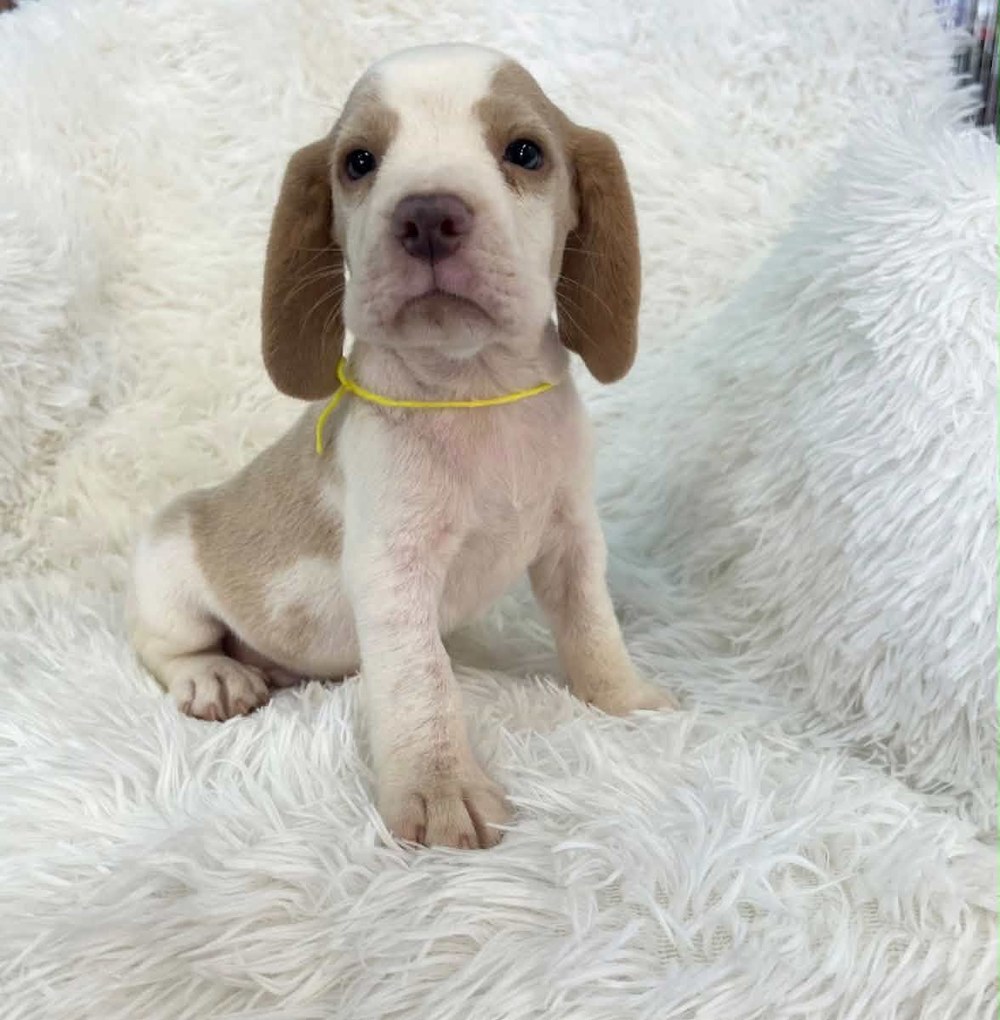
Cooper
10 June 2026 · 20 August 2026
Seventy-one days of life. Eighteen of them at home with us. Thirteen of those spent fighting for the rest.
Who he was
Cooper was clever. Not puppy-clever — properly clever. He worked things out. He learned where his food was kept, which door meant going outside, and exactly which face to make when he wanted something. You could watch him thinking, and then watch him decide.
He was an explorer. Every corner of every room had to be inspected, and everything he found had to be tested with his teeth first — shoes, table legs, cables, fingers, blankets, the edge of a rug he had personally declared his enemy. Nothing was safe and nothing was boring. He met the world mouth-first, the way puppies do, and he was delighted by all of it.
And he could not stand being alone. He followed us from room to room rather than miss anything, and if a door closed between us he would sit down on the other side of it and wait. So we made sure he never had to wait long. Someone was always with him — through the good days, through the nights, through thirteen days of illness, through every journey to the vet, and through the last hour of his life. He was held the whole way. He was never alone. Not once.
What happened to him
We brought Cooper home at eight weeks old. He was healthy and perfect and completely himself for five, maybe six days. That was all the well time he got.
On the very first day he vomited, we took him straight to the vet. Not the next morning — that same day. He was tested, and it was canine parvovirus.
He was treated hard from the first hour. Every medication available to him, intravenous fluids, anti-nausea drugs, antibiotics to hold off the infections that parvo lets in. He went to the vet every single day for medicine and fluids. Nothing was delayed. Nothing was skipped. Nothing was spared.
And he fought for thirteen days. Thirteen long days, and he actuallywon — he beat the virus. The infection cleared. For a little while we thought we had him back.
But parvovirus does not just make a puppy sick. It destroys the lining of the intestine — the cells that absorb food and water. In Cooper the damage went too deep to heal. His gut could no longer take nutrition from anything he ate. He kept trying to eat, and his body kept getting nothing from it. There was no way back from that.
He died on 20 August 2026, of complete exhaustion. He beat the virus, and the virus took him anyway. He was ten weeks old.
We want to say this plainly, for anyone who reads this and is frightened for their own puppy, or grieving one already: we did everything. We went on day one. He had every drug and every fluid and every day at the clinic. It still was not enough. Parvo is not something you can reliably love or pay your way out of once it is inside a puppy. That is why the only real answer is to never let it start.
What parvovirus actually is
Canine parvovirus — “parvo” — attacks the fastest-dividing cells in a puppy’s body: the lining of the intestines, and the bone marrow that makes white blood cells. It strips the gut bare and knocks out the immune system in the same stroke. Puppies who die of it die of dehydration, of being unable to absorb anything, of infection coming through the door parvo left open — or, like Cooper, of damage that stays behind after the virus itself is gone.
It is one of the most contagious diseases a dog can catch, and these are the facts that catch people out:
- It spreads through faeces — but you will almost never see the faeces. An infected dog sheds an enormous quantity of virus, and a microscopic trace of it is enough.
- It survives outside a dog for months, sometimes a year— in soil, on grass, on pavement, on shoes, on clothes, on hands, on a blanket, on the floor of a lift. The dog that left it there can be long gone.
- Most household cleaners do not kill it. Ordinary soap sprays and alcohol hand gel do not reliably destroy it. Diluted bleach does, and so does thorough physical washing with soap under running water.
- Puppies are the ones who die of it. Between roughly six and sixteen weeks old they are at their most vulnerable — the protection from their mother’s milk has faded, and their own vaccinations are not finished yet. That gap is the danger. Cooper was taken inside it.
- It moves fast. Tiredness, then no appetite, then vomiting, then foul-smelling and often bloody diarrhoea. A puppy can go from playing to critical inside a day.
The part that matters most
If you have an unvaccinated puppy, please read this
If anything on this page saves one puppy, we would like it to be this. It is the advice we would give anyone, and it is what we wish everyone already knew.
Keep them off the ground outside
Until your vet confirms the vaccinations are complete and have had time to take effect, your puppy should not walk on public ground. Pavements, parks, grass verges, pet shop floors, the vet’s waiting-room floor, the corridor of your building, a friend’s garden where another dog has been. Carry them. Your own secure garden, used only by vaccinated dogs, is a different matter — ask your vet about it.
Nobody touches your puppy with unwashed hands
People will want to pet them, and they will mean nothing but kindness. It is still your job to say no. Ask them to wash their hands properly with soap and water first — every time, no exceptions, no matter who they are. Hand gel is not enough for this virus. It is not rude to protect your puppy. Say it kindly, and say it anyway.
Take your own shoes off at the door
You can carry parvo home on the soles of your shoes without ever seeing a sick dog. Leave shoes at the door, wash your hands when you come in, and change your clothes if you have been around other dogs.
Finish the whole vaccination course
Puppy vaccines are given as a series of doses a few weeks apart, usually starting somewhere around six to eight weeks old. One shot is not protection. Your puppy is not covered until the course is finished and roughly another two weeks have passed on top. Do not skip a dose, do not be late, and follow your own vet’s schedule for where you live.
If your puppy vomits, go now
Do not wait to see how they are in the morning. Do not wait for diarrhoea. Call your vet immediately, and tell them you are worried about parvo so they can keep your puppy away from other animals. Early treatment is the single biggest thing in your puppy’s favour. Cooper went on day one — go on day one.
If a dog in your home has had parvo
Do not bring a new puppy in for a long time, and speak to your vet first. The virus can sit in your home and garden for months. Bleach what can be bleached, and ask your vet how long to wait.
For Cooper
He was a small, warm, stubborn, curious little dog who chewed everything he could reach and did not like closed doors. We had him for eighteen days, and he changed our home completely.
We loved him very, very much — more than we knew how to say to him, so we said it to him constantly anyway, and we hope some of it got through. We were beside him at the beginning and we were beside him at the end, and he did not have to be alone for a single minute in between.